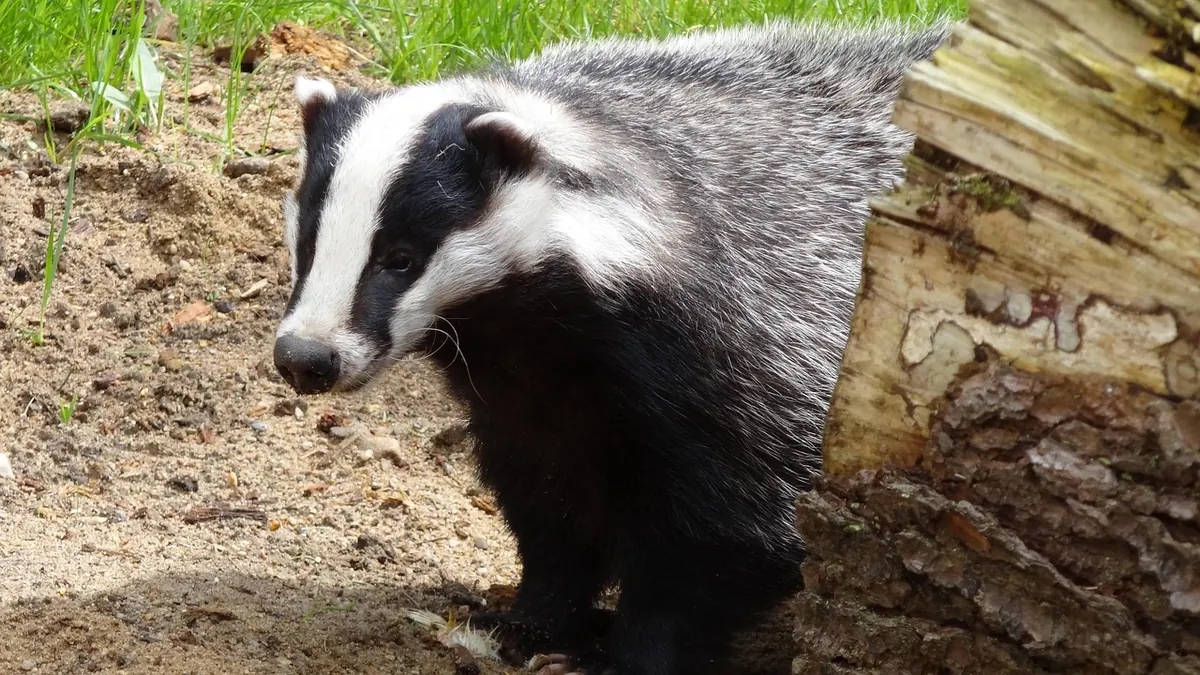
A badger's head appearing at the mouth of a sett, sniffing the air before it commits to the evening, is one of the finest wildlife sightings in Britain. It is also one you can spoil without realising. Badgers have poor eyesight but excellent hearing and an even better sense of smell, and a sett that is disturbed night after night can be abandoned. Watching them well comes down to timing, patience and a handful of simple habits.
Badgers are widespread across the UK, but a sett near you is not a guarantee of a sighting. There will be evenings when nothing shows at all, and that is completely normal. Emergence depends on weather, the time of year, how hungry the group is and how much disturbance the sett has had recently.
A badger social group usually shares one main sett, with smaller setts used on and off through the year. If you can, go out first with a local badger group or a Wildlife Trust event. Many county groups run evening watches in spring and summer, and one evening with someone who knows a site teaches you more than a season of guessing. Otherwise, ask a farmer or landowner whether they have a sett on their land and whether you may watch quietly from a distance. Permission makes everything easier, including your own peace of mind.
Badgers are active all year round and do not hibernate, though in long cold spells they may stay below ground for days at a time. For a beginner, May to September is the easiest window: the evenings are long, the ground is soft and the badgers are working hard to feed. Cubs are born in late winter and usually appear above ground in spring, so April to June is a particularly rewarding period — though cubs are also the most easily disturbed, and the group will react faster to anything unfamiliar.
Autumn is underrated. Badgers are busy putting on weight before winter, and they often emerge earlier and stay out longer.
Arrive at least forty-five minutes before sunset and be settled well before it. The first badger usually appears somewhere between sunset and an hour afterwards, but in midsummer they can be out while the light is still good, and in cold weather they may not appear until well after dark.
Damp, mild, still evenings are the best of all; earthworms come to the surface in wet conditions, so badgers have a reason to be out early. Avoid hard frost, heavy rain and windy nights. If the wind is blowing from you towards the sett, your scent arrives before you do — either find a different position or save the visit for another evening.
Sit twenty to thirty metres away, no closer. Choose a spot with something behind you — a hedge, a tree trunk, a bank — so your outline is broken up, and sit low. A foam mat or a folding stool is worth carrying.
Once you are in position, stay there. Stillness matters far more than camouflage. Wear quiet clothing rather than a rustling waterproof, avoid strong deodorant or insect repellent, silence your phone and keep your movements slow when you do make them. Never walk up to the sett, never peer into an entrance and never stand on the spoil heap outside it. Badgers can smell where you have been standing hours after you have gone.
Keep visits occasional rather than nightly. A sett watched once or twice a week by a quiet, distant observer is a sett that carries on as normal.
White light will send badgers straight back underground. A dim red filter over a low-power LED torch is the standard compromise: red light is far less alarming to most nocturnal mammals, though it is not invisible to them, so use as little as you can get away with. On a bright moonlit night, the best light is no light at all — let your eyes adjust and watch by silhouette.
A few rules make a real difference. Set the torch to its lowest setting and test it at home first; a strip of red plastic taped over the lens of a cheap torch is fine. Point the beam at the ground or just to one side of the animal, never directly into its eyes. Switch the light on before badgers emerge and leave it on, steady. Sudden changes in light are more startling than a continuous, dim glow. And never use a camera flash.
Badgers tell you when you have got too close. Watch for these, and treat two or three together as a clear message:
If this happens, freeze first — don't jump up and don't flick the torch on and off. If the badgers stay down, leave quietly and do not return that evening. If it happens on consecutive visits, leave that group alone for several weeks and try a different sett. Repeated disturbance can cause a group to abandon a sett altogether.
Badgers and their setts are protected. In England, Scotland and Wales, the Protection of Badgers Act 1992 makes it an offence to kill, injure, take or cruelly treat a badger, and to interfere with a sett — damaging it, destroying it or obstructing access to it — without a licence. Northern Ireland has its own equivalent legislation. For a watcher, the practical rules are simple: don't dig, don't block entrances, don't touch, and don't cross private land without permission. Watching quietly from a public right of way is fine.
Two more things. Don't feed badgers, however tempting it is: it draws them towards roads, gathers them at artificial food sources and changes natural behaviour. And if you find an injured or dead badger, contact a wildlife rescue or your local badger group rather than handling it yourself. If you ever see digging at a sett, a dog being sent down, or anything resembling baiting, report it to the police on 101 and ask for the wildlife crime officer. Do not confront anyone.
Take warm layers even in June, a sitting mat, a low-power torch with a red filter, spare batteries, binoculars and a flask. Leave the dog at home, and leave the drone at home too. If you are new to a site and unsure about access or protected species, your county badger group or the relevant countryside body is the right place to ask before you go.
The best badger watchers are the ones the badgers never notice. Get that right, and the evenings look after themselves.
Photo: Beeki / Pixabay